I Too by Langston Hughes Date Released Guggenheim Fellowship for Creative Arts Us Canada
:focal(515x96:516x97)/https://tf-cmsv2-smithsonianmag-media.s3.amazonaws.com/filer/0e/e9/0ee9e32c-4783-4c24-a21f-66ad0e7ad8e8/npg7282hughesrweb.jpg)
In large graven letters on the wall of the newly opened National Museum of African American History and Culture on the National Mall is a quote from poet Langston Hughes: "I, too, am America."
The line comes from the Hughes'southward poem "I, too," start published in 1926.
I, too, sing America.
I am the darker brother.
They send me to swallow in the kitchen
When company comes,
But I laugh,
And eat well,
And grow strong.
Tomorrow,
I'll be at the table
When company comes.
Nobody'll dare
Say to me,
"Consume in the kitchen,"
Then.
Besides,
They'll see how beautiful I am
And be aback—
I, also, am America.
From THE Nerveless POEMS OF LANGSTON HUGHES. By permission of Harold Ober Associates Incorporated
The poem is a singularly significant affidavit of the museum's mission to tell the history of U.s. through the lens of the African-American feel. Information technology embodies that history at a particular betoken in the early on twentyth century when Jim Crow laws throughout the S enforced racial segregation; and argues against those who would deny that importance—and that presence.
Its mere 18 lines capture a serial of intertwined themes about the relationship of African-Americans to the majority civilization and lodge, themes that evidence Hughes' recognition of the painful complexity of that relationship.
Tomorrow,
I'll exist at the table
When visitor comes.
In that location is a multi-dimensional pun in the title, "I, likewise" in the lines that open up and close the verse form. If you hear the word as the number two, it suddenly shifts the terrain to someone who is secondary, subordinate, even, inferior.
Hughes powerfully speaks for the second-course, those excluded. The full-throated drama of the poem portrays African-Americans moving from out of sight, eating in the kitchen, and taking their place at the dining room table co-equal with the "company" that is dining.
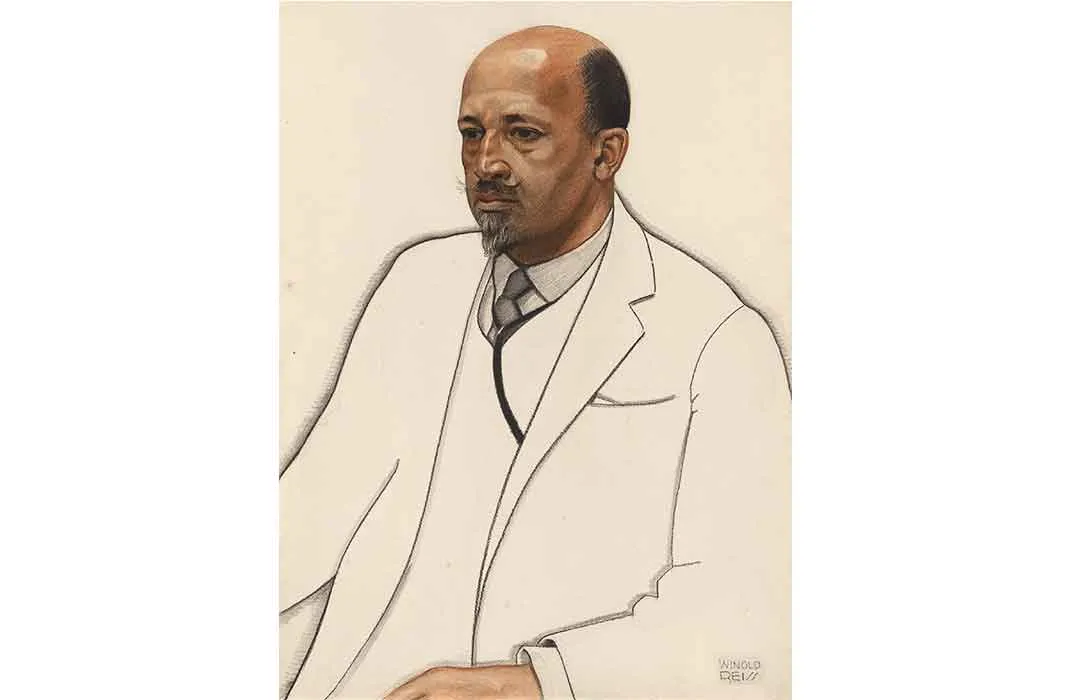
Intriguingly, Langston doesn't amplify on who owns the kitchen. The firm, of course, is the U.s. and the owners of the house and the kitchen are never specified or seen because they cannot be embodied. Hughes' sly wink is to the African-Americans who worked in the plantation houses every bit slaves and servants. He honors those who lived below stairs or in the cabins. Fifty-fifty excluded, the presence of African-Americans was fabricated palpable by the smooth running of the house, the appearance of meals on the tabular array, and the continuity of material life. Enduring the unendurable, their spirit lives now in these galleries and among the scores of relic artifacts in the museum'southward underground history galleries and in the soaring arts and culture galleries at the top of the statuary corona-shaped building.
The other reference if you hear that "besides" as "two" is not subservience, but dividedness.
Hughes' pays homage to his gimmicky, the intellectual leader and founder of the NAACP, W.Eastward.B. DuBois whose speeches and essays most the dividedness of African-American identity and consciousness would rivet audiences; and motivate and compel the adamant activism that empowered the Civil Rights Movement of the mid-20th century.
The African-American, according to DuBois in his seminal work,The Souls of Black Folks,existed e'er in two 'places" at one time:
"One ever feels his 2-ness, an American, a Negro; ii souls, ii thoughts, 2 unreconciled strivings; two warring ethics in 1 nighttime body, whose dogged forcefulness lonely keeps it from being torn asunder."
DuBois makes the body of the African-American—the body that endured and so much piece of work and which is beautifully rendered in Hughes' second stanza "I am the darker brother"—as the vessel for the divided consciousness of his people.
DuBois writes of the continual desire to end this suffering in the merging of this "double cocky into a ameliorate and truer self." Yet in doing and so, DuBois argued, paradoxically, that neither "of the older selves to be lost."
The sense of being divided in ii was non just the root of the problem not just for the African-American, but for the The states. As Lincoln had spoken about the coexistence of slavery with freedom: "A business firm divided against itself cannot stand."
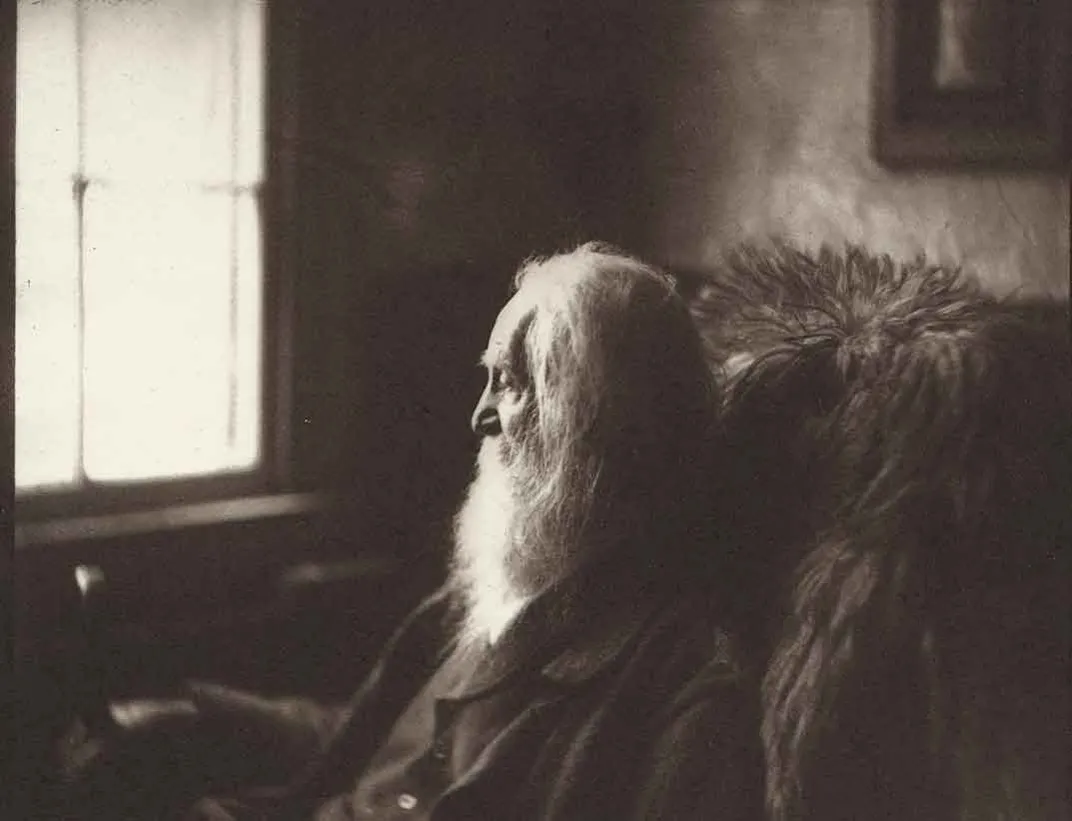
Hughes ties together this sense of the unity of the separate and diverse parts of the American republic by beginning his verse form with a near direct reference to Walt Whitman.
Whitman wrote, "I sing the body electrical" and went on to associate the power of that body with all the virtues of American democracy in which ability was vested in each individual acting in concert with their fellows. Whitman believed that the "electricity" of the body formed a kind of adhesion that would bind people together in companionship and love: "I hear America singing, the varied carols I hear. . ."
Hughes makes Whitman—his literary hero—more than explicitly political with his assertion "I, too, sing America."
The verb here is important because it suggests the implicit if unrecognized artistic piece of work that African-Americans provided to make America. African-Americans helped sing America into existence and for that work deserve a seat at the table, dining every bit coequals with their fellows and in the company of the world.
At the end of the verse form, the line is inverse considering the transformation has occurred.
"I, too, am America."
Presence has been established and recognized. The firm divided is reconciled into a whole in which the diverse parts sing sweetly in their separate harmonies. The problem for the politics of all this, if non for the verse form itself, is that the simple exclamation of presence—"They'll see how beautiful I am. . ." —may not be enough.
The new African American Museum on the National Mall is a powerful assertion of presence and the legitimacy of a story that is unique, tragic and inextricably linked to the totality of American history. "I, besides" is Hughes at his well-nigh optimistic, reveling in the bodies and souls of his people and the power of that presence in transcendent modify. But he fully realized the obstacles to true African-American emancipation and credence in the house of American republic. He was the poet, retrieve, who also wrote "What volition happen to a dream deferred?"
colemanthishatthe.blogspot.com
Source: https://www.smithsonianmag.com/smithsonian-institution/what-langston-hughes-powerful-poem-i-too-americas-past-present-180960552/
0 Response to "I Too by Langston Hughes Date Released Guggenheim Fellowship for Creative Arts Us Canada"
Post a Comment